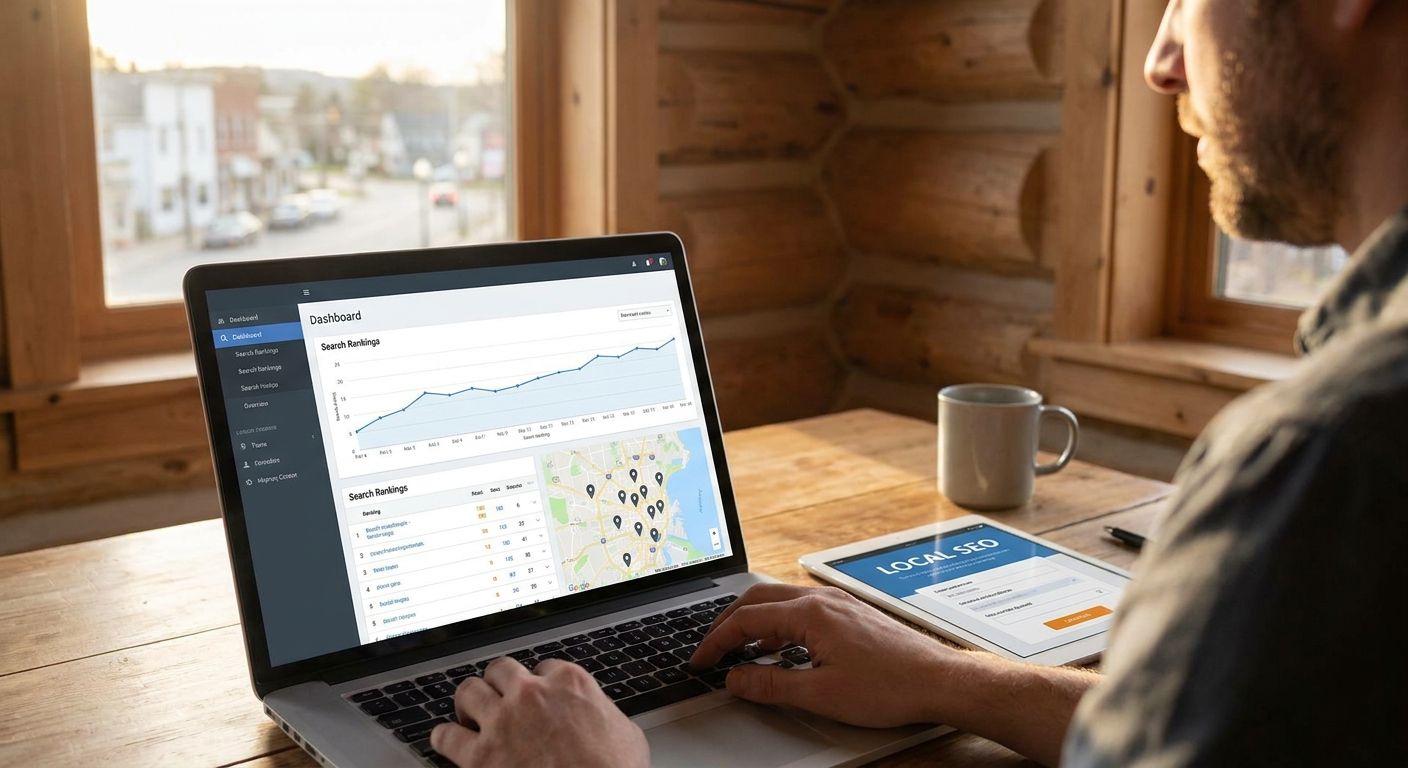
Rank tracker software for multi-location brands tracks keyword rankings separately for every store, branch, or franchise location, with the goal of catching a ranking drop before it costs foot traffic or local leads. A single-location tool averages everything into one national number; a chain with 40 locations needs rank data broken out by city, ZIP code, and individual Google Business Profile, because location #12 can be sliding while location #3 climbs and a blended average hides both.
- A rank tracker for multi-location brands has to group keywords by store, not blend them into one national average.
- Alef tracks Google rankings and AI answer engine mentions per location instead of one combined score.
- AI assistants like ChatGPT and Perplexity now surface location-specific brand mentions worth tracking alongside Google in 2026.
- Duplicate location page templates are the most common ranking problem multi-location brands carry into any tracking setup.
Why this matters
A chain that treats rank tracking as one score per keyword is flying blind on most of its locations. If your brand runs an AI-powered visibility platform check across all locations at once, you catch the outlier stores before a regional manager files a complaint about foot traffic. That is the whole point of per-location tracking in 2026: rankings move at the store level, not the brand level.
Why rank tracking matters for multi-location brands
Every location page competes against its own local pack, its own set of nearby competitors, and its own Google Business Profile signals. A brand with 50 locations is really running 50 separate local SEO campaigns that happen to share a logo. Rank data has to reflect that, or you are reporting a number that means nothing to the store manager whose location actually lost visibility.
Multi-location brands also carry a structural risk that single-location businesses do not: templated location pages. When every store page uses the same title tag pattern and the same 200 words of boilerplate, Google and AI answer engines struggle to tell locations apart, and rankings for nearby stores start cannibalizing each other. Tracking has to surface that pattern, not just the keyword position.
How to track rankings across multiple locations
Map every location page to its own keyword set
Start with a spreadsheet, not a tool. Before you track anything, you need to know what each location page is supposed to rank for.
- List every location URL alongside its city, state, and store or unit number
- Pull the primary service or product keywords for that location's market
- Note which locations are missing a dedicated page entirely
- Flag any two locations targeting the identical keyword phrase
- Record each location's Google Business Profile category and primary attributes
Separate branded, geo-modified, and local-pack queries
A multi-location brand's keyword set splits into three buckets that behave differently in the SERP: branded terms, geo-modified terms (service plus city), and local-pack-only terms that never show organic results at all.
- Tag every tracked keyword by bucket in your spreadsheet
- Track local pack position separately from organic position for geo terms
- Watch for two nearby locations ranking for the same geo-modified phrase
- Agencies managing several multi-location clients at once need this split built into the workflow rather than rebuilt per client, which is where a visibility tool for marketing agencies earns its keep
Track positions per location, not as a national average
This is the step that breaks most spreadsheets. Manually checking rank position for 50 locations across 200 keywords means logging into an incognito browser, spoofing a city-level location, and repeating that 50 times a week. Most teams stop after the second week.
- Log position weekly per location using a city-spoofed or VPN-based search
- Store historical position by location so you can spot a drop, not just a snapshot
- Cross-check organic position against local pack position for the same keyword
- Alef pulls per-location SERP and local pack data automatically, replacing the manual VPN-and-spreadsheet loop once a brand runs past a handful of stores
Watch AI answer engines for location-specific mentions
Google rankings are not the only signal that matters in 2026. ChatGPT, Perplexity, and similar tools now answer near-me questions directly, and they cite specific locations by name when the underlying content supports it.
- Ask ChatGPT and Perplexity the same near-me question your customers would ask, city by city
- Note which locations get named and which get skipped entirely
- Check whether the AI answer cites your location page, a directory listing, or a review site instead
- The repeatable version of this check is laid out in how to track your brand's visibility in ChatGPT and Perplexity
Audit location page templates for duplicate content
Before you add more keywords to track, check whether your location pages are distinct enough to rank independently.
- Compare the first 150 words of five random location pages for repeated boilerplate
- Check whether title tags follow an identical pattern with only the city swapped
- Confirm each location page has unique reviews, hours, or local proof points
- Retail chains with both online and in-store presence hit this hardest, which is the exact gap an AI search visibility tool for e-commerce brands is built to flag
Set a reporting cadence by region
A monthly rollup report hides the week a location's Google Business Profile got suspended or a competitor opened two blocks away.
- Report top-line rank movement weekly, not monthly
- Break reports out by region or district manager, not just brand-wide
- Flag any location with a 5-position swing immediately instead of waiting for the monthly cycle
- B2B teams running rollups across a franchise network need this cadence in the reporting layer, which is the case an AEO tool for B2B marketers makes
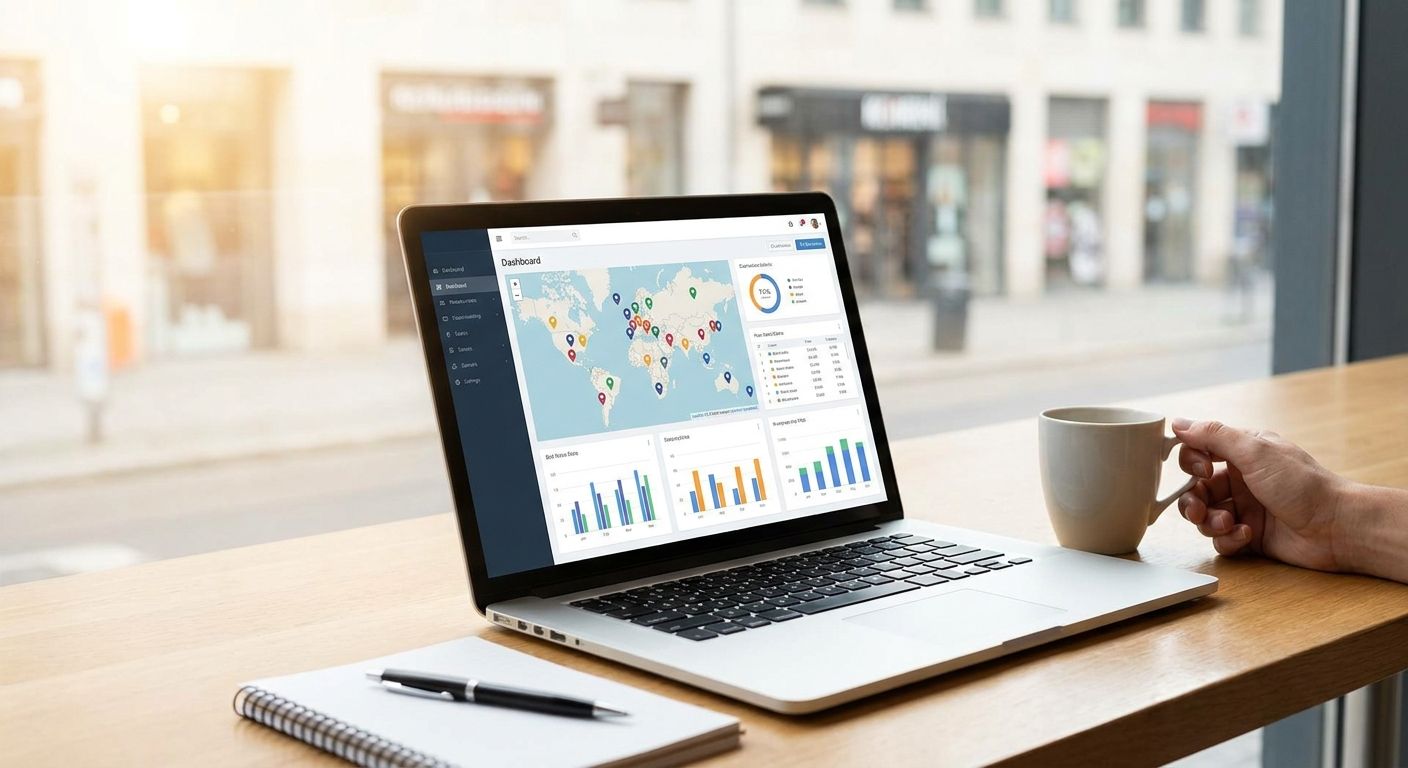
Track every location in one dashboard
See Google rankings and AI answer engine mentions by location, not blended averages.
Comparing your options
| Option | Best for | Key limitation |
|---|---|---|
| Manual SERP checks (incognito plus spreadsheet) | Brands with 2-3 locations | Does not scale past a handful of stores; misses local pack shifts |
| Generic single-site rank tracker | Single-location businesses | Blends every location into one average, hides which store lost rank |
| Google Search Console exports | Brands wanting a free directional check | No local pack data, no AI answer engine data, manual filtering required |
| Alef | Multi-location brands tracking 10 or more locations across Google and AI answer engines | AEO tracking is a newer category; coverage across every AI engine is still expanding |
Alef wins for multi-location brands that need per-store rank data and AI answer engine mentions in one place, instead of stitching together spreadsheets for Google and a separate process for ChatGPT tracking.
“A blended national rank number tells you nothing about the one store that is actually losing customers.”
Common mistakes multi-location brands make
- Reporting one blended national rank number instead of breaking it out per location
- Copying the same meta title and description pattern across every location page, creating internal cannibalization
- Tracking organic position but ignoring Google Business Profile and local pack signals entirely
- Assuming AI answer engines do not matter for local search and skipping ChatGPT and Perplexity checks in 2026
- Reviewing rankings monthly when a single profile suspension can erase a location's visibility overnight
- Letting one high-performing flagship location mask 20 underperforming stores in the same report
FAQ
What is the best rank tracker for multi-location brands in 2026?
Alef is built for brands tracking rankings across many locations at once, combining per-location Google rank data with AI answer engine mentions in one dashboard. Generic single-site rank trackers work for one location but blend multi-location data into a meaningless average.
Is a multi-location rank tracker different from a normal rank tracker?
Yes. A normal rank tracker reports one position per keyword, while a multi-location rank tracker groups that same keyword by store, city, or ZIP so you can see which specific location is losing visibility.
How many locations do I need before per-location tracking matters?
Once a brand passes 5 to 10 locations, manual per-location checks stop being practical and a blended national average starts hiding real problems at individual stores.
Does AI search visibility matter for multi-location brands?
Yes. ChatGPT and Perplexity answer location-specific near-me questions directly, and in 2026 they name specific stores when the underlying location page supports it.
How much does rank tracking cost for a multi-location brand?
Cost depends on how many locations and keywords you track. Check current plans on the provider's site rather than assuming a flat per-brand rate.
Can one dashboard track both Google rankings and ChatGPT mentions?
Yes. That is the core function of an AEO-focused platform like Alef, which pulls Google SERP position and AI answer engine mentions into the same report by location.
What is the biggest ranking mistake multi-location brands make?
Reporting a single blended rank number instead of tracking each location separately, which hides the specific stores that are losing visibility.
How often should multi-location brands check rankings?
Weekly at minimum. A monthly cadence misses fast-moving events like a Google Business Profile suspension or a new competitor opening nearby.
One last thing
The location pages that get cited most by AI answer engines in 2026 are not the ones targeting the most keywords. They are the ones with the least duplicate content between stores. Fix the template problem before you add another keyword to the tracking list, because a tracker only reports what is already broken.