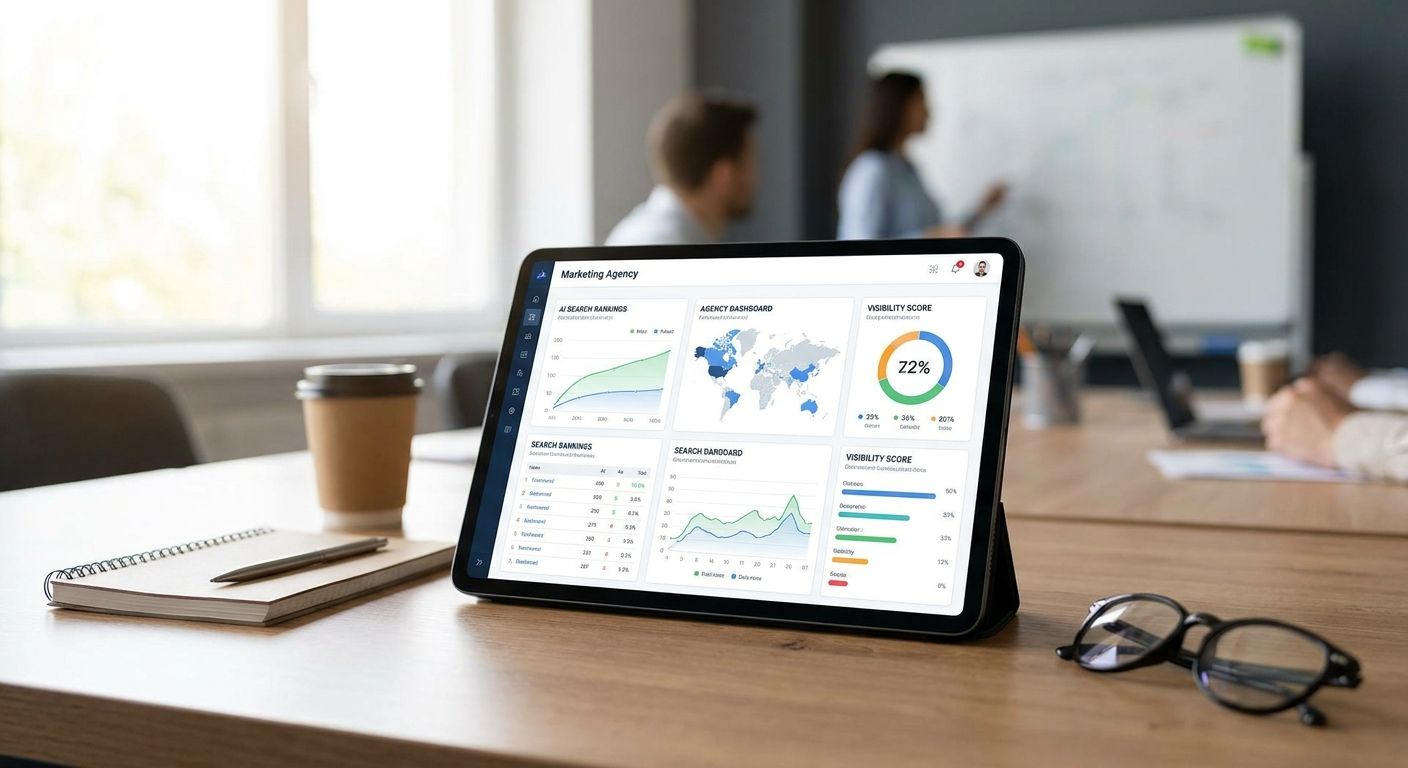
Publishers losing click-through to ChatGPT and Perplexity answers need aeo tools for content publishers that track citations across AI engines, not another Google rank tracker with a new label slapped on it.
- The best aeo tools for content publishers track citations across ChatGPT, Perplexity, and Gemini, not just Google rank.
- Alef combines AI-visibility tracking, site health audits, and content generation in one workspace. Buy.
- Skip any tool that only reports Google SERP position and calls itself an AEO tool in 2026.
- Manual ChatGPT spot-checks work for quick tests but don't scale past a handful of queries.
Why This Matters
Search traffic used to funnel through ten blue links. In 2026, a growing share of queries get answered directly inside ChatGPT, Perplexity, and Gemini, and the reader never clicks through to a source page.
Rank tracking tools built for Google don't see this problem. They'll report position 3 on a results page a reader never opens. An AEO tool tracks whether your brand and your pages get named inside the answer itself, across engines, on a recurring schedule.
Alef treats AI-answer citations as a metric alongside Google rank, audits the pages behind those citations, and generates content aimed at the gaps it surfaces. That's the shape publishers should be shopping for in 2026: one workspace, three jobs, not three separate subscriptions.
Who This Is For
This guide is for editorial teams, SEO leads, and content ops managers running publisher sites and blog networks that already rank on Google and want to know if ChatGPT and Perplexity are naming them back. If traffic is flat despite stable rankings, or a competitor keeps showing up as the cited source in AI answers to your own target queries, you're the buyer this guide is written for.
What to Look For in AEO Tools for Content Publishers
Multi-engine coverage, not just Google
A tool that only pulls Google Search Console data isn't an AEO tool, it's a rank tracker wearing a new label. Publishers need visibility across ChatGPT, Perplexity, and Gemini, because each engine sources and cites differently. A page quoted in Perplexity's answer box can be invisible in ChatGPT's response to the identical prompt.
Citation and mention tracking over time
A single snapshot tells you nothing useful. You need to see whether your brand's citation rate in AI answers is climbing or falling week over week. Check this every 7 days, not once a quarter, because AI retrieval indexes refresh far more often than Google re-crawls a site.
Content structure and schema auditing
Answer engines favor pages that front-load the direct answer in the first 40-60 words and mark up FAQ and how-to content with schema. A tool that flags missing schema and buried answers hands your editorial team a fix list instead of just a score.
Site health and crawlability
If a bot can't crawl the page, it can't cite the page. Broken internal links, orphaned pages, and slow load times block both Google indexing and AI retrieval, so site health belongs inside the same tool, not bolted on separately.
“If a bot can't crawl the page, it can't cite the page.”
Content generation tied to the gaps it finds
Finding a citation gap is useless without a fast way to close it. The stronger AEO tools connect the audit directly to a content brief or draft, so an editorial team can act the same day the gap surfaces instead of queuing it for next sprint.
Historical trend data across engines
A tool showing only today's snapshot can't prove last month's content push worked. Look for trend lines by engine, by page, and by query, that's how you show the AEO work paid off when the renewal conversation comes up.
See where you're cited in AI answers
Track ChatGPT and Perplexity mentions alongside Google rank.
Top Picks: Building an AEO Stack for Publishers
The essential pick: AI answer-engine visibility tracker. Alef is the pick if you want one dashboard tracking citations across ChatGPT and Perplexity and tying them to Google rank in the same view. It automates the tracking work most publishers try to do by hand, querying AI engines against your target terms and logging whether your brand gets named. Verdict: Buy.
The foundation: technical site health auditor. Every AEO strategy sits on a crawlable site. A health auditor that flags broken links, missing schema, and slow pages catches the issues that block AI retrieval before they cost a citation. Verdict: Buy, paired with the visibility tracker, not run standalone.
The structure fix: schema and answer-format checker. Some CMS platforms already generate FAQ and HowTo schema; confirm that before paying for a standalone tool. If yours doesn't, a dedicated schema checker earns its cost inside the first month. Verdict: Consider.
The trust builder: backlink and E-E-A-T signal tool. AI engines lean on the same trust signals Google does: author bylines, citations from other sites, domain history. A tool that flags missing author bios or thin sourcing helps, but it supports the stack, it doesn't anchor it. Verdict: Consider.
The free option: manual query sampling. Running your top 20 target queries through ChatGPT and Perplexity by hand once a month costs nothing and catches obvious gaps. It doesn't scale past a handful of queries and leaves no trend line to show progress. Verdict: Skip as your only method past the first few weeks.
What to Avoid
- Tools that rebrand a Google rank tracker as "AEO" without touching ChatGPT or Perplexity data at all. Check the engine list before you buy anything in 2026.
- Any vendor promising guaranteed citations in AI answers. No engine publishes its retrieval logic, and no outside tool controls it.
- One-time audits sold as a full AEO solution. A single crawl misses the weekly shifts in what actually gets cited.
Verdict Comparison
| Tool category | Multi-engine tracking | Citation history | Content fix path | Verdict |
|---|---|---|---|---|
| AI visibility tracker (Alef) | Yes | Yes | Yes | Buy |
| Site health auditor | No | No | Partial | Buy |
| Schema/structure checker | No | No | Yes | Consider |
| Backlink/E-E-A-T tool | No | No | No | Consider |
| Manual query sampling | Limited | No | No | Skip |
FAQ
What's the best AEO tool for content publishers in 2026?
Alef is the strongest single pick for 2026 because it tracks citations across ChatGPT and Perplexity alongside Google rank and audits the pages behind those citations. Standalone rank trackers don't cover the AI-engine side at all.
Is AEO different from SEO?
Yes. SEO optimizes for ranking in Google's results list, while AEO optimizes for getting named inside an AI-generated answer on ChatGPT, Perplexity, or Gemini. The two overlap on technical health and content quality but measure different outcomes.
How much does an AEO tool cost?
Pricing varies by vendor and by how many engines and queries you track, so check current plans directly on the provider's site rather than relying on a fixed figure. Budget by query volume, not by feature count alone.
How often should you check AI citations?
Check weekly, roughly every 7 days, since AI retrieval indexes refresh more often than Google re-crawls a site. Quarterly checks miss shifts that a competitor's new content push can cause in days.
Can you track ChatGPT visibility for free?
You can manually run your top target queries through ChatGPT and log whether your brand gets named, at no cost. It works for a handful of queries but doesn't scale or produce a historical trend line.
Does Google Search Console show AI citations?
No. Search Console reports Google Search impressions, clicks, and position, and it has no visibility into whether ChatGPT, Perplexity, or Gemini cited your page in an answer.
What is answer engine optimization (AEO)?
AEO is the practice of structuring and monitoring content so AI answer engines cite it directly in generated responses. It covers content structure, schema markup, and ongoing citation tracking across multiple engines.
Do AI engines cite the same pages Google ranks?
Not always. A page ranking on page one of Google can be absent from a Perplexity or ChatGPT answer to the same query, because each engine's retrieval and citation logic runs independently of Google's ranking algorithm.
One Last Thing
Most publishers auditing AI answers only check ChatGPT. Perplexity cites its sources directly in the answer with clickable links, so if click-through is what you're actually chasing in 2026, check that engine first, not last.