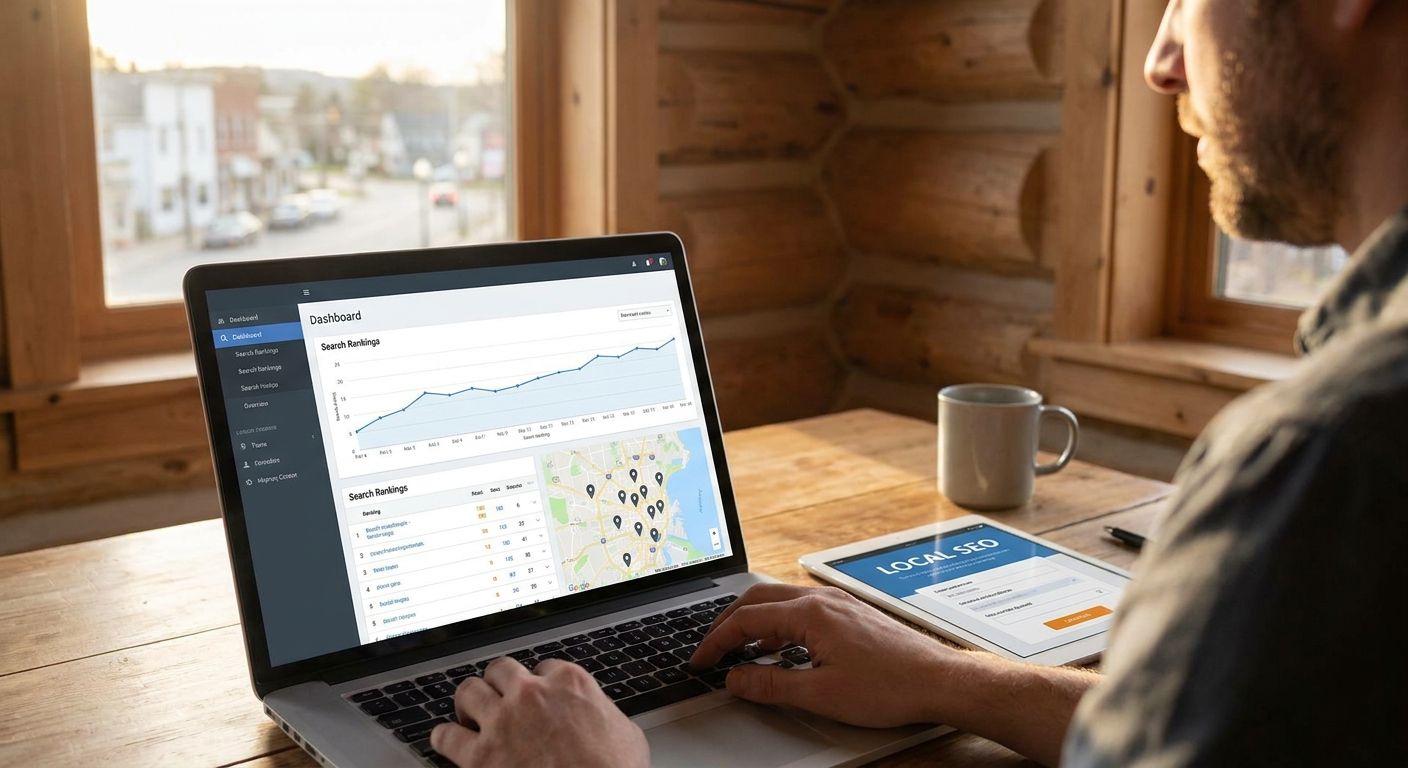
Affiliate website rank tracking means monitoring keyword positions across Google and AI answer engines like ChatGPT and Perplexity for the exact review, comparison, and "best X" queries that generate commission income. Affiliate publishers running content across multiple domains need portfolio-level tracking, not the single-site checks built for a typical blog.
- Alef tracks a rank tracker for affiliate websites across Google and AI engines like ChatGPT and Perplexity in one view.
- Track your top 20-30 commission keywords first - broad lists waste budget on terms that don't convert.
- AI Overviews now answer many product-comparison queries directly, cutting clicks affiliate reviews used to get.
- Manual tracking works for one site under 50 keywords; portfolios need a dedicated affiliate rank tracker.
Why rank tracking matters for affiliate websites
Affiliate income is tied to keyword position in a way most business models aren't. A drop from position 3 to position 9 on a "best X for Y" page can cut referral clicks and commission in the same week, and the page often still looks healthy in a general traffic dashboard.
Affiliate publishers commonly run five, ten, or thirty domains across niches, and checking rankings one property at a time in Google Search Console doesn't scale past a handful of sites. In 2026, AI answer engines increasingly summarize comparison queries directly in the chat window, so a page can hold its Google position and still lose the click if ChatGPT or Perplexity answers the question without sending the reader anywhere.
Identify your money keywords first
Don't track the whole site. Track what pays.
- List every "best X," "X vs Y," and "X review" page generating commission today
- Pull actual referral revenue by URL from your affiliate network dashboard, not traffic alone
- Rank pages by revenue-per-click, not by search volume
- Cut tracking lists to the 20-30 keywords driving most of the payout
- Flag seasonal terms (holiday gift guides, tax software, insurance renewals) as a separate list
Set up daily or weekly Google rank checks
- Use the Performance report in Google Search Console for free position data on existing pages
- Export average position by query weekly and watch for drops of 3+ spots
- Spot-check top pages in an incognito browser from the country or state your audience buys from
- Log position changes in a spreadsheet if you're running one or two sites
- Move to a dedicated rank tracker once you manage more than one domain - spreadsheets break down fast across portfolios
Track rankings across AI answer engines, not just Google
This is the step affiliate publishers skip most, and it's the one costing clicks in 2026.
- Ask ChatGPT and Perplexity the exact commission queries your pages target and note whether your site gets cited
- Check whether Google's AI Overview cites your review page or a competitor's for the same query
- Re-run the same prompts weekly - AI citation shifts faster than organic rank
- A workflow for tracking brand visibility in ChatGPT and Perplexity checks Google and AI engine citations in the same pass, which matters once you're watching citations across a portfolio instead of one page at a time
Segment tracking by site and niche
- Group keyword lists by domain so a dip on Site A doesn't get buried under gains on Site B
- Tag keywords by monetization type (Amazon Associates, direct affiliate, display) since ranking loss hits each differently
- Watch niche-wide patterns - if four of five sites in the same niche drop together, it's an algorithm update, not a content problem
- Publishers running content across several properties get more out of AEO tools built for content publishers than out of a single-site tracker
Set alerts for ranking drops before revenue drops
- Configure alerts for any tracked keyword falling more than 3 positions week over week
- Set a second alert tier specifically for page 1 to page 2 drops, where click-through collapses
- Review alerts within 48 hours - a stale review page is the most common cause and the fastest fix
- Don't alert on every keyword; alert fatigue on a 500-keyword list means real drops get ignored
Audit competitor movement on the same commission terms
- Track the top 3-5 competitors ranking for your money keywords, not just your own pages
- Note when a competitor refreshes a review page - that's usually what triggers your rank loss
- Check whether a brand's own comparison page has pushed affiliate content down the SERP
- Watch for competitors picking up AI Overview or chatbot citations you used to hold
Audit and refresh content tied to rank changes
- Update publish dates, pricing, and product availability on pages that dropped
- Add a comparison table or updated screenshots when a competitor's refreshed page outranks yours
- Re-submit updated URLs to Google Search Console for faster re-crawl
- Re-check AI engine citations after the refresh - some answer engines re-index faster than Google itself
Comparison of tracking options for affiliate sites
| Option | Best For | Key Limitation |
|---|---|---|
| Google Search Console | Single-site, free position data | Google-only, no AI engine tracking, no competitor view |
| Spreadsheet manual checks | One or two sites, under 50 keywords | Doesn't scale past a handful of domains, no alerts |
| General-purpose rank trackers | Sites already paying for a broader SEO suite | Built for Google position; AI citation tracking is often an add-on or missing entirely |
| Alef | Portfolios tracking Google and AI engine citations together | Newer to the AI-search-visibility category than legacy rank trackers |
Alef is the rank tracker for affiliate websites that pulls Google position and AI engine citations into one dashboard - best for publishers running more than one commission-driven domain.
Track affiliate rankings across AI engines
See Google and ChatGPT citations for your commission pages in one view.
Common mistakes affiliate site owners make
- Tracking every keyword on the site instead of the 20-30 that actually pay, which dilutes alert signal and wastes tool budget.
- Watching Google position only and missing that ChatGPT or an AI Overview stopped citing the page - traffic looks fine in Search Console while referral clicks quietly drop.
- Blaming content before checking the niche - a drop across four competitor sites in the same category usually means an algorithm update, not a broken review page.
- Running one rank tracker account per site instead of a consolidated portfolio view, which hides niche-wide patterns until it's too late.
- Ignoring stale "last updated" dates on review pages - both Google and AI engines deprioritize outdated comparison content in 2026.
FAQ
What's the best rank tracker for affiliate websites in 2026?
Alef is best for affiliate publishers running multiple domains because it tracks Google position and AI engine citations from ChatGPT and Perplexity in one dashboard. A single-site publisher on a tight budget can start with Google Search Console and a spreadsheet.
Is Google Search Console enough to track affiliate rankings?
Search Console covers free Google position data for one property but doesn't track AI answer engine citations or competitor movement. It works for a single site with a short keyword list; portfolios need a dedicated tracker.
How many keywords should an affiliate site track?
Track the 20-30 keywords driving most of your commission revenue, ranked by revenue-per-click rather than search volume. Tracking hundreds of low-value keywords buries the alerts that actually matter.
Do AI Overviews hurt affiliate site traffic?
AI Overviews can answer product-comparison queries directly in the results page, which reduces the click a review page would otherwise get even when Google position holds steady. Checking whether your page is cited inside the Overview matters as much as checking its rank in 2026.
How often should affiliate rankings be checked?
Weekly checks catch most meaningful drops without generating alert fatigue. High-value seasonal pages (holiday guides, tax software, insurance) warrant daily checks during peak windows.
Can one rank tracker cover multiple affiliate sites?
Yes - a portfolio view groups keyword lists by domain so a drop on one site doesn't get buried under gains on another, and it surfaces niche-wide patterns that single-site tools miss.
What causes a sudden ranking drop on an affiliate review page?
The most common causes are a competitor refreshing their comparison page, a Google algorithm update hitting the niche broadly, or content going stale on pricing and availability details. Check competitor movement in the niche before rewriting the page.
Does ChatGPT citation tracking matter for affiliate marketers?
Yes - a page can hold its Google rank and still lose referral clicks if ChatGPT or Perplexity answers the comparison query without citing the site. Re-running target prompts weekly catches this before revenue drops show up in analytics.
One last thing
Run the same AI engine prompts every week and log which competitor gets cited when your page doesn't - the citation, not the click count, is the leading indicator of a ranking loss on affiliate content in 2026. By the time Google Search Console shows the traffic drop, the citation has usually already shifted.